
The centre of Mali is sinking deeper into an unbroken spiral of violence. Against this tense backdrop, the National Human Rights Commission (CNDH) has spoken out following the attacks on Ningari and Sarédina, drawing attention to the structural weaknesses of the transition government’s security strategy.
A grim pattern has become all too familiar: villages are hit, defenceless civilians are executed, homes are burned, and then official statements express shock and sympathy. The latest atrocities committed in the Bandiagara circle, in Ningari and Sarédina, reveal a brutal reality that official talk tries to hide. Despite triumphant declarations about the growing power of the Malian Armed Forces (FAMa), the state is still failing to protect ordinary citizens from day to day.
The illusion of territorial control and the neglect of civilians
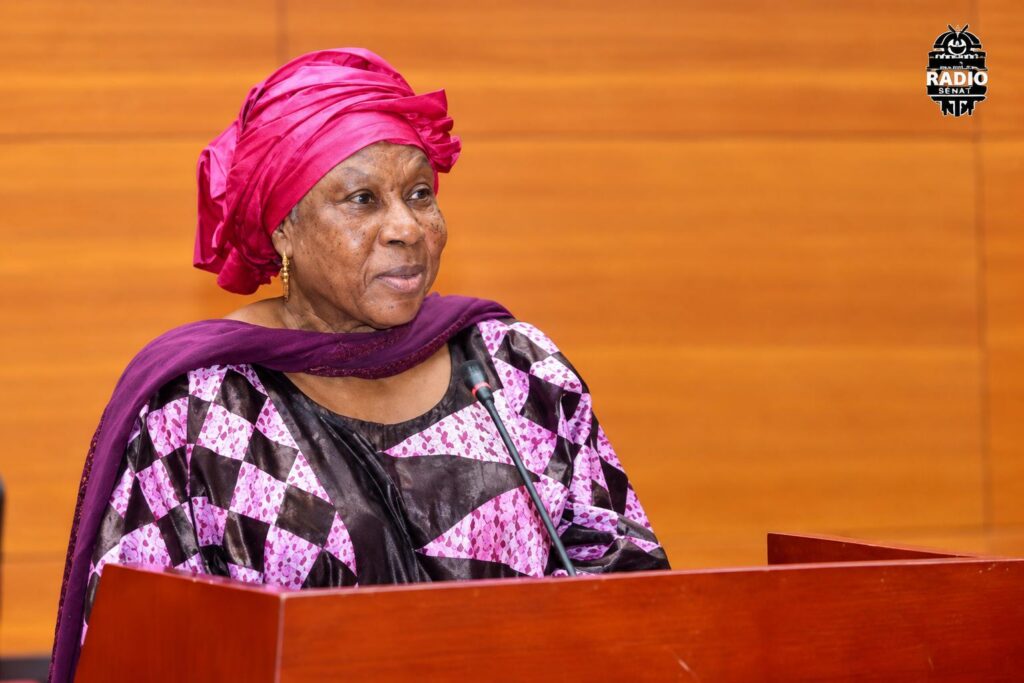
In a statement signed by acting president Aissata Founè Tembely, the CNDH sends a sharp warning to authorities in Bamako. By stressing that the safety of people and their property is the first sovereign duty of the state, the commission is in effect acknowledging that administrative and military action on the ground has not worked.
In the Dogon country, the security vacuum created by weak or absent state structures leaves residents exposed to terrorist armed groups. Public speakers in Bamako celebrate sovereignty and communications victories, but the vital social contract between the state and the citizens of central Mali has been broken. Sovereignty should not be judged by firm speeches in the capital; it should be judged by whether a farmer or trader in Ningari can live in safety.
Institutionalised impunity and the empty promise of investigations
After every tragedy, the CNDH calls on the authorities to open independent and impartial investigations and bring the guilty before the courts. But how much weight can such demands carry in a justice system that is barely functioning inside conflict zones?
The endless accumulation of mass killings, without a single major trial to establish responsibility, feeds a devastating sense of impunity. When no concrete legal action follows, these calls for investigations start to resemble a bureaucratic ceremony designed to fill an institutional void. A justice system that is never present destroys people’s trust in the state. It also pushes communities toward self-defence or risky alliances, making the fragmentation of society even worse.
The trap of a military-only strategy and the cost of ignoring the law
By asking the FAMa to comply fully with International Humanitarian Law, the CNDH is also highlighting the dangers of a purely military approach with no safeguards. Civil society regularly accuses the security forces and their auxiliaries of confusing civilians with combatants and committing abuses during anti-terror operations.
Such an approach, which values media-friendly operations and statistics over lasting security for communities, ends up producing the opposite result. Each act of brutality or summary execution becomes an effective recruiting tool for extremist groups. The CNDH insists that the fight against terrorism cannot be separated from human rights. A military victory won outside the boundaries of the law is an illusion, and it is one that lays the ground for future revolts.
The warning from the human rights commission could not be stronger. If the transitional authorities continue to choose political positioning and security communication over real protection, impartial justice and the rule of law, Mali may lose far more than territory. It may lose the legitimacy of the state itself.


More Stories
Niger : les remaniements militaires de Tiani trahissent-ils un sommet sous tension ?
Togo’s security landscape shifts as foreign military influence expands
Tiani fractures Niger military cohesion