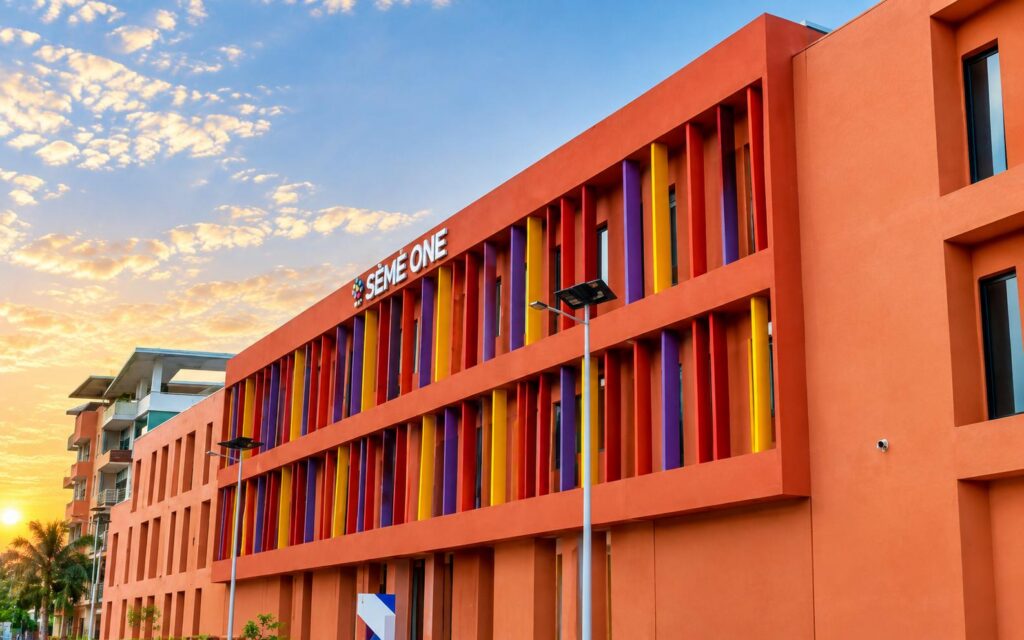
Benin’s higher education landscape is entering a decisive new phase with consequences that will ripple through the labour market, local industry and the wider economy. On 15 September 2026, the Sèmè City Institute of Technology (SCITI) and the University of Reims Champagne-Ardenne (URCA) formalised a strategic partnership through the signing of an agreement to launch a Master’s programme in design engineering with a sustainable engineering track.
Why this master’s matters for Benin’s economy
This new course represents the very first Master’s-level programme delivered by SCITI, the engineering school integrated into the national innovation hub Sèmè City. It is the product of cooperation between the Beninese government and the French academic institution, and it leads to an international degree. The stakes for the national economy are considerable: the programme is designed to train a new generation of technical managers on Beninese soil, reducing the need to send talent abroad and keeping skills — and their future economic output — inside the country.
From executors to designers: a shift with real-world impact
The programme focuses on the entire life cycle of products and infrastructure. Students will learn to integrate environmental, economic and performance criteria right from the theoretical modelling stage. This approach matters for businesses because it produces professionals who can anticipate costs, energy use and compliance requirements before a single brick is laid or a single line of production code is written.
This initiative forms part of Benin’s economic and industrial transformation policy. For years, the sub-region has depended on importing technologies and external expertise for its major construction projects. The government now intends to equip the country with engineers capable of building solutions tailored to local realities — a change that could lower project costs, shorten delays and create skilled jobs at home.
The industrial zones waiting for these graduates
The stated objective is to strengthen the human capital needed to support the development of the country’s industrial zones, such as the Glo-Djigbé Special Economic Zone (GDIZ), and to anchor Benin among the technology innovation hubs of West Africa. For companies operating in these zones, the arrival of locally trained sustainable engineering designers could mean a more reliable pipeline of qualified staff, less reliance on costly foreign consultants and a stronger capacity to innovate in fields like green construction, manufacturing and infrastructure.



More Stories
How American military doctrine shaped General Barmou’s special forces and what it means for Niger’s security
Togo’s press sanctions: the real cost for citizens and business
Niger’s reshuffle: how the loyalty payout deepens pain for households and businesses