
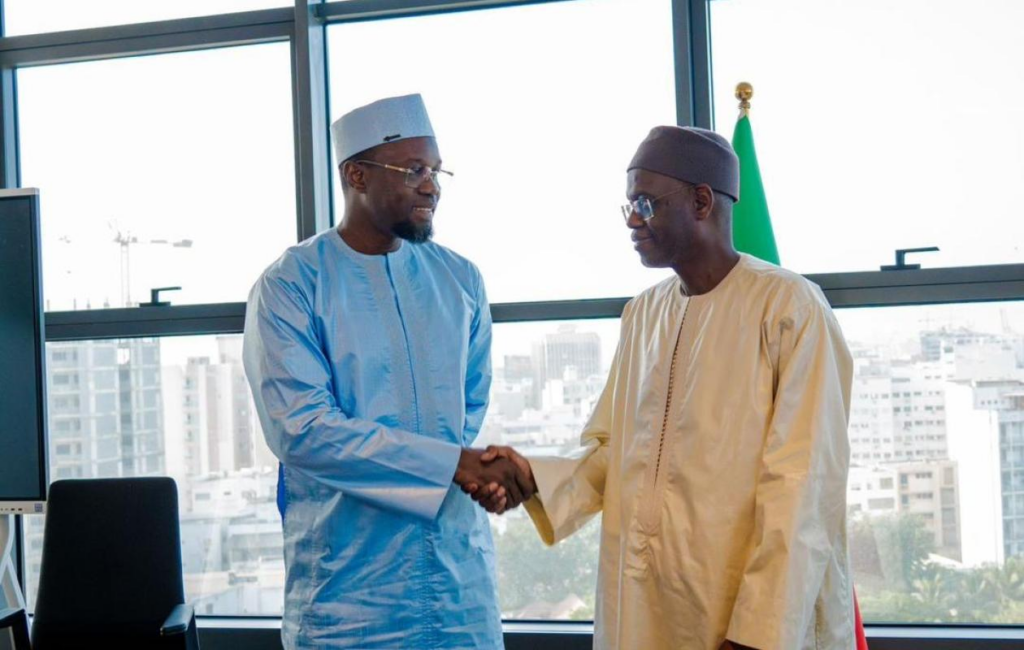
Senegal’s Prime Minister office has undergone a significant transformation following the appointment of Al Aminou Lô in May 2026. This shift follows the tenure of Ousmane Sonko, whose leadership in the Prime Minister’s office since November 2025 had already introduced sweeping administrative changes. The restructurings are guided by Decree No. 2025-1431, which delineates the allocation of state services and oversight of public entities between the Presidency, the Prime Minister’s office, and various ministries.
Ousmane Sonko’s administrative reforms
During his brief but impactful tenure, Ousmane Sonko significantly reorganized the internal structure of the Prime Minister’s office. Under Decree No. 2025-1929 issued on November 27, 2025, several key entities were established to streamline governance. These included the Reform Monitoring and Orientation Unit, the Service Inspection, the Asset Valuation and Recycling Initiative Steering Committee, and the Procurement Commission.
The Government Secretariat General also saw the creation of new bodies such as the Council of Ministers Preparation and Institutional Follow-up Unit and the National Commission for Access to Information. These changes aimed to enhance transparency and operational efficiency within the government’s administrative framework.
Al Aminou Lô’s structural adjustments
With Al Aminou Lô’s appointment, further refinements have been made to the organizational structure of the Prime Minister’s office. One notable adjustment involves the transfer of the National Content Monitoring Committee’s Technical Secretariat from the Ministry of Petroleum and Mines to the Prime Minister’s office. This move underscores a strategic realignment of responsibilities to better align with national priorities.
Conversely, several departments have been reassigned to other ministries. The National Civil Service and Volunteerism Directorate, previously under the Prime Minister’s office, now falls under the Ministry of Youth and Sports. Similarly, the Government Information and Communication Bureau (BIC-Gouv), previously led by journalist Mame Gor Ngom, has been transferred to the Ministry of Communication and Institutional Relations.
The National Observatory of Detention Facilities has also seen a change in oversight, now reporting to the Ministry of Justice. This restructuring reflects a broader effort to clarify administrative jurisdictions and optimize resource allocation across government departments.
Streamlining government communication
Another key development is the dissolution of the position of State Secretary for Government Relations and Spokesperson, a role previously held under Ousmane Sonko’s administration. Instead, the President has opted to assign these responsibilities to a full-fledged minister overseeing Communication and Institutional Relations, who will also serve as the official Government Spokesperson.
These administrative adjustments highlight a deliberate strategy to refine the division of labor between the Prime Minister’s office and other ministries, ensuring a more cohesive and efficient governance structure.



More Stories
Sonko’s sharp critique of Senegal’s imf deal stirs debate
Cameroun : prendre des mesures incitatives pour booster les inscriptions sur les listes électorales
DRC’s new inclusive national dialogue: what outcomes can be expected?